October 20, 2026
Accessibility is an essential consideration for businesses that welcome customers, employees, vendors, and other visitors. Building entrances, interior passageways, and door hardware can affect whether people with disabilities can enter and move through a property independently. When these features create unnecessary barriers, businesses may face accessibility complaints, costly modifications, and potential legal disputes. A proactive approach to reviewing entrances and pathways helps property owners identify concerns before they become larger problems. Understanding how door design, installation, maintenance, and accessibility requirements work together can support a safer, more welcoming commercial environment.
Review Accessibility Requirements
The Americans with Disabilities Act establishes accessibility requirements for many businesses and commercial facilities. Doorways, entrances, and routes through buildings must be evaluated according to the applicable standards, the type of property, and the work being performed. Business owners should understand which requirements apply to their locations instead of assuming that a building is compliant simply because it was accessible when it first opened.
Reviewing commercial doors begins with understanding how visitors approach, open, pass through, and move away from each entrance. Accessibility can be affected by the doorway's clear width, the force needed to open it, the height of its hardware, and the surrounding floor surface. Identifying these features early helps property managers determine whether an inspection or professional assessment is necessary. Because requirements vary by circumstance, qualified accessibility professionals and legal advisers can help clarify obligations before major changes are made.
Measure Doorway Clearance
Doorway clearance affects whether people using wheelchairs, walkers, and other mobility aids can pass through an opening comfortably. The required clear width is not necessarily the same as the nominal width of the door itself. Hinges, handles, stops, and the door's position can influence the space available for passage. Businesses should therefore evaluate the actual opening rather than relying solely on product descriptions or architectural labels.
Approach space matters as well. A person may need room to position a mobility device, reach the handle, operate the door, and move through without becoming trapped by the door's swing. Tight corners, nearby furniture, merchandise displays, and storage containers can obstruct this process. Reviewing the entire approach helps identify barriers that might otherwise be overlooked during a quick visual inspection.
When evaluating commercial doors, property managers should consider both sides of the opening, including hallways and adjacent rooms. Clear pathways make entrances easier to navigate and can improve movement for everyone using the building. If a doorway appears too narrow or its surrounding space restricts access, a qualified professional can assess potential adjustments and determine whether the existing configuration meets applicable accessibility standards.
Inspect Hardware and Operating Force
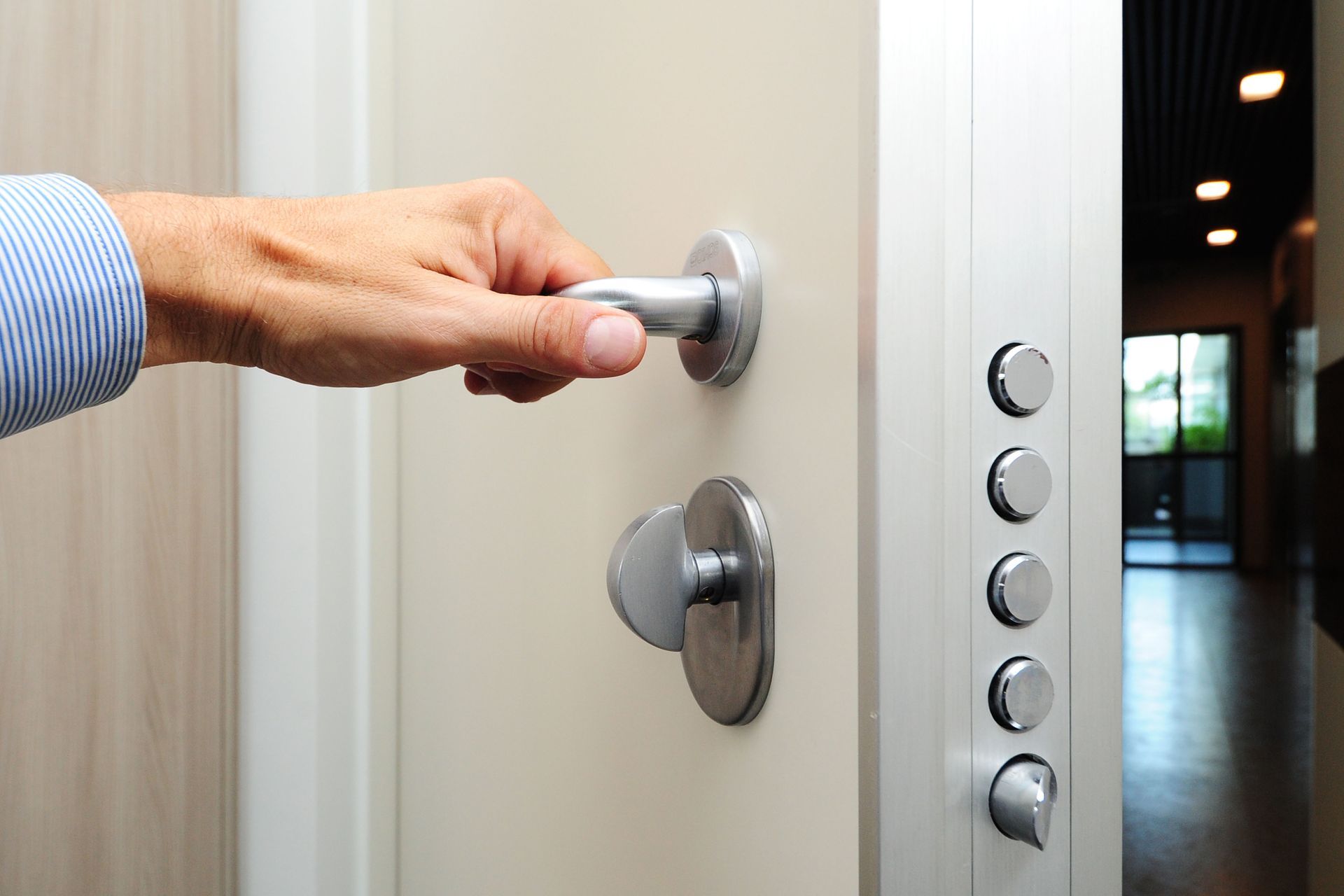
Door hardware should allow people with different physical abilities to operate an entrance without unnecessary difficulty. Traditional round knobs can be challenging for individuals with limited hand strength or dexterity, while appropriately selected lever handles and accessible operating mechanisms may be easier to use. Hardware height, shape, placement, and ease of operation should be considered together rather than as separate design details.
Opening force is another important consideration. A heavy door, misaligned hinge, damaged closer, or excessive seal resistance can make entry difficult. Applicable requirements may limit the force needed to open certain doors, although specific rules and exceptions depend on the door type and circumstances. Testing an entrance can help identify obvious operating problems, but a qualified professional should verify compliance when measurements or technical judgments are required.
Businesses should also examine locks, latches, and closing mechanisms to ensure they function properly without creating avoidable barriers. A door that slams shut too quickly may create difficulties for someone who needs additional time to pass through. Routine adjustments and appropriate hardware selection can improve usability while preserving the security and function of the entrance.
Evaluate Door Age and Condition
Wear can gradually affect the performance and accessibility of an entrance. Hinges may loosen, closers may lose their proper adjustment, frames can shift, and weather seals may deteriorate. These changes can increase operating force, interfere with latching, or reduce the effective opening.
According to At Home in the Future, commercial doors generally have an expected service life of approximately 15 to 30 years, depending on their construction and use. That estimate offers context for maintenance planning, but age alone does not determine whether a door is safe or accessible. A relatively new installation may still have design or adjustment problems, while an older door may remain serviceable when properly maintained and compliant with applicable requirements.
Property managers should look for visible damage, loose hardware, sticking movement, uneven gaps, and signs of deterioration around frames and thresholds. They should also consider how frequently each entrance is used and whether exposure to weather or heavy traffic accelerates wear. When repairs no longer address recurring problems effectively, replacement may provide an opportunity to improve accessibility, reliability, and long-term maintenance planning.
Maintain Accessible Entrances
Accessibility should remain part of ongoing building maintenance rather than being treated as a one-time installation concern. Cleaning schedules, equipment inspections, and repair procedures can help preserve the intended operation of entrances. Staff members should know how to report doors that become difficult to open, fail to latch, or obstruct a designated accessible route. Prompt attention can prevent minor maintenance issues from becoming persistent barriers.
The area surrounding commercial doors also deserves regular attention. Mats, cords, promotional signs, delivery items, and furniture can reduce maneuvering space or create tripping hazards. Thresholds should be checked for damage, and nearby floors should remain stable and unobstructed.
Automatic operators can support access when appropriate for the location, but they also require inspection and maintenance. Sensors, activation controls, timing, and closing behavior should function as intended. An automatic system should not be assumed to resolve every accessibility concern, since the doorway, surrounding route, and hardware may still present barriers. Qualified technicians can help assess system performance and recommend appropriate service when problems appear.
Document Inspections and Corrective Actions
Keeping clear maintenance records helps property owners track recurring problems, completed repairs, and outstanding accessibility concerns. Records may include inspection dates, observations, service reports, photographs, and descriptions of corrective work. This information gives managers a practical way to monitor conditions across the property and establish which issues require attention first. Documentation also supports communication among building owners, maintenance staff, contractors, and accessibility consultants.
A written inspection process should identify who evaluates entrances, how concerns are reported, and how corrective actions are verified. When a barrier is discovered, managers should assess its impact and arrange appropriate professional guidance rather than relying on informal assurances. Accessibility obligations can involve more than door operation, so reviews should consider connected routes, signage, maneuvering space, and other relevant features.
Businesses should avoid treating a completed checklist as automatic proof of legal compliance. Applicable obligations depend on the facility, its use, alterations, and other circumstances. A checklist is most useful as a practical screening and maintenance tool that supports informed follow-up.
Accessible entrances contribute to a commercial property that is easier to navigate, safer to use, and more welcoming to the public. Business owners can begin by reviewing their doorways, addressing maintenance issues, and seeking professional guidance when requirements are uncertain. For assistance with entrance hardware, repairs, and practical door solutions, contact Hugo's Locksmithing & Keys Inc to discuss the needs of the property and take the next step toward more accessible access.